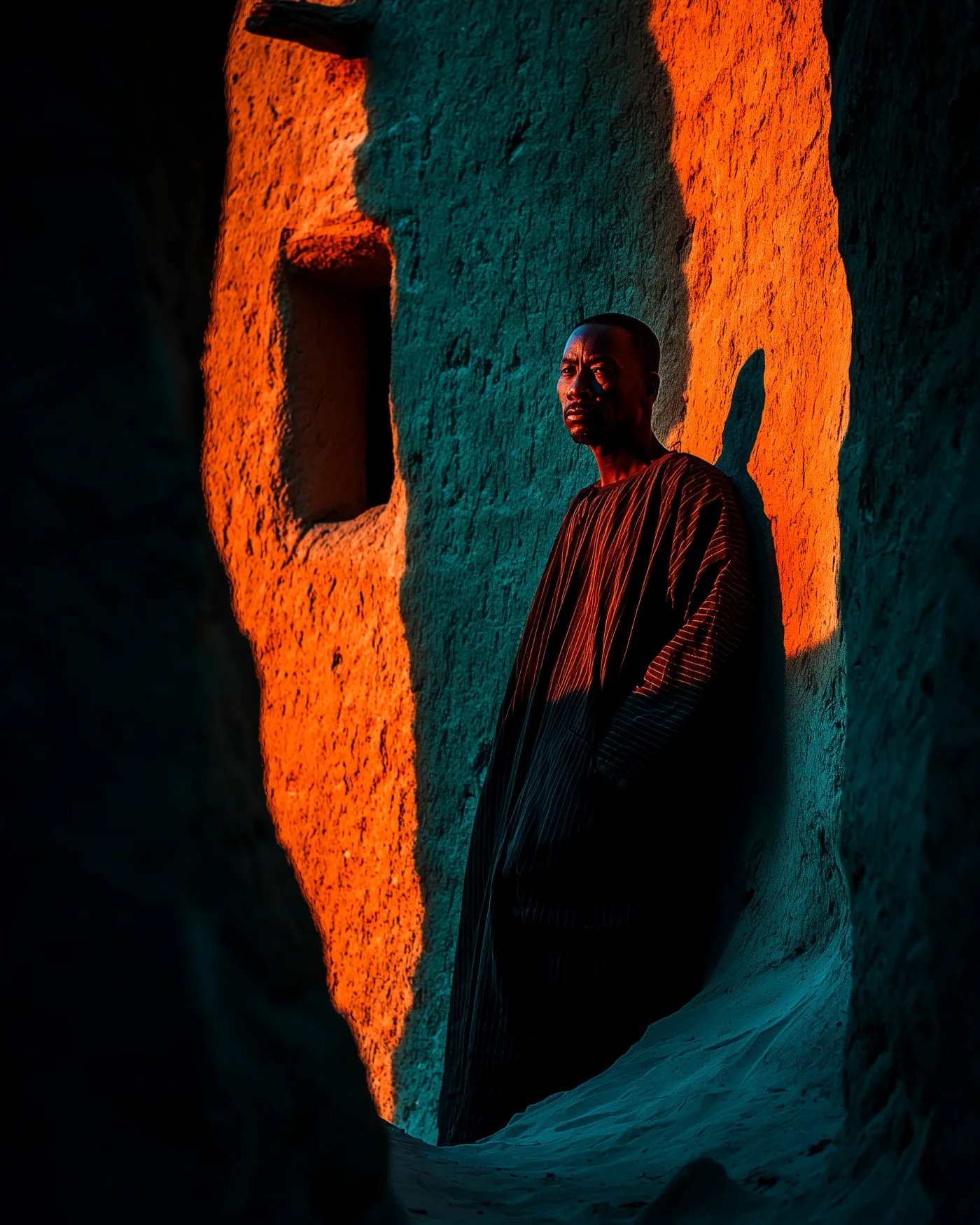
Marabet
it's just my face it looks that way when I let it rest after a tiring day
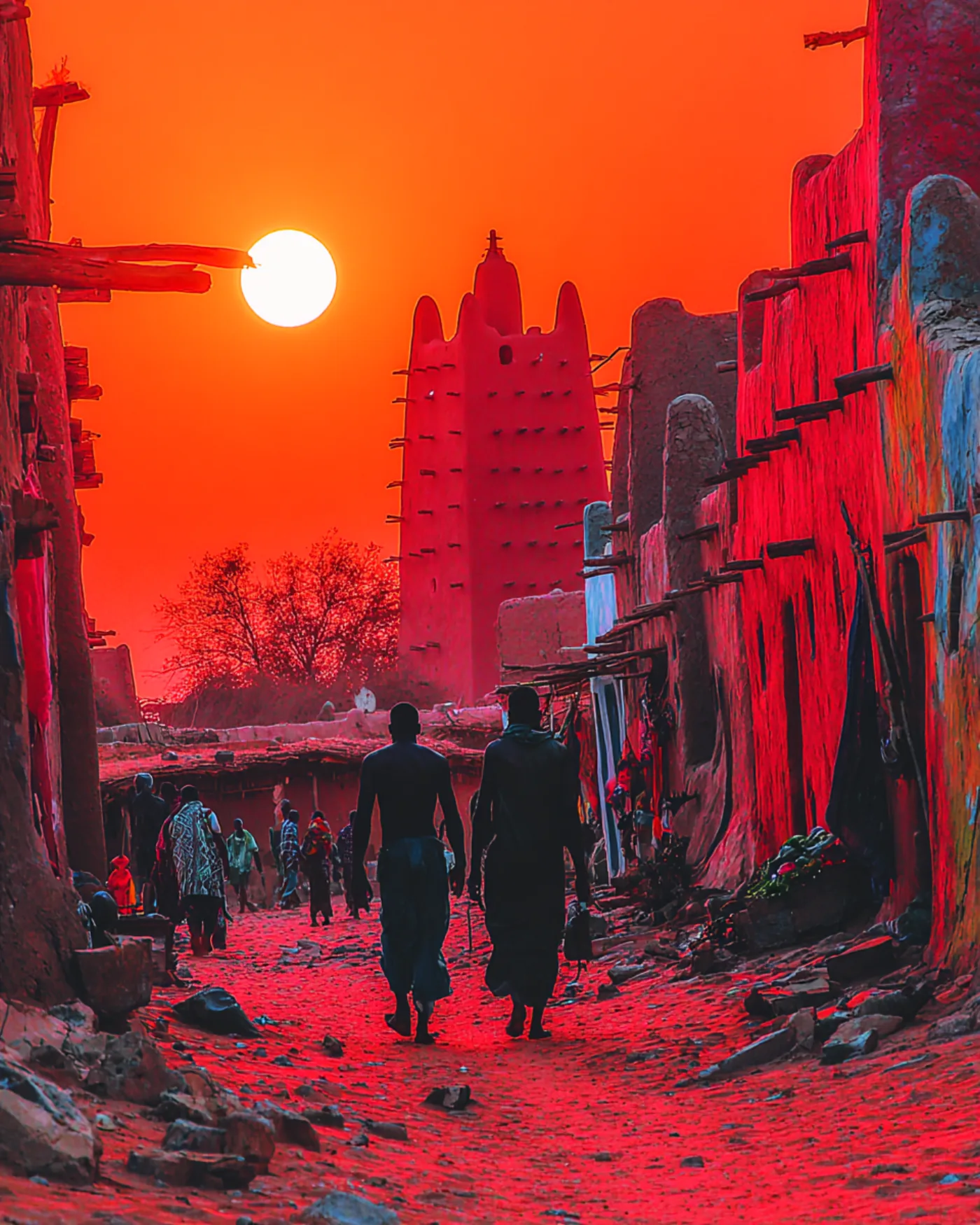
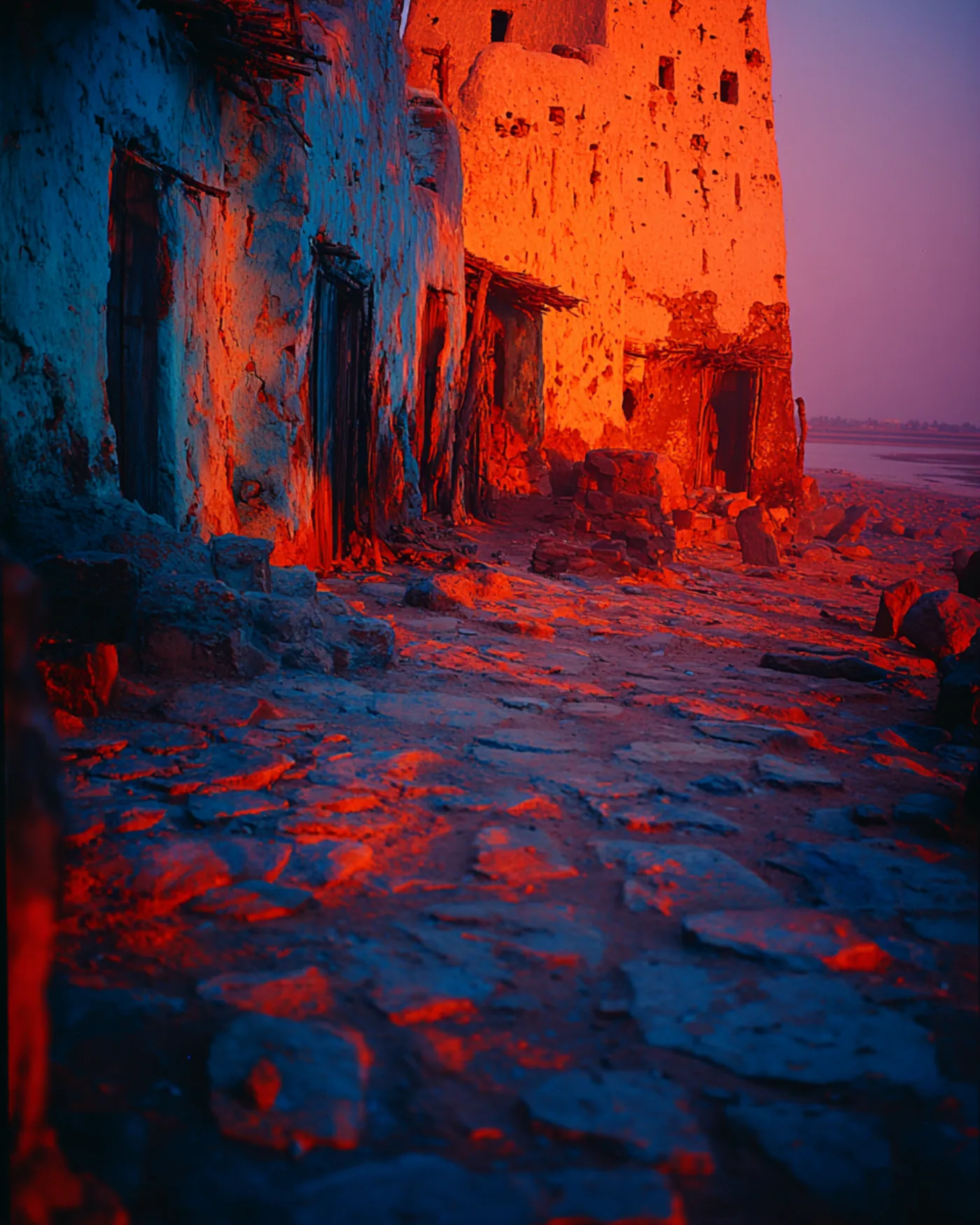

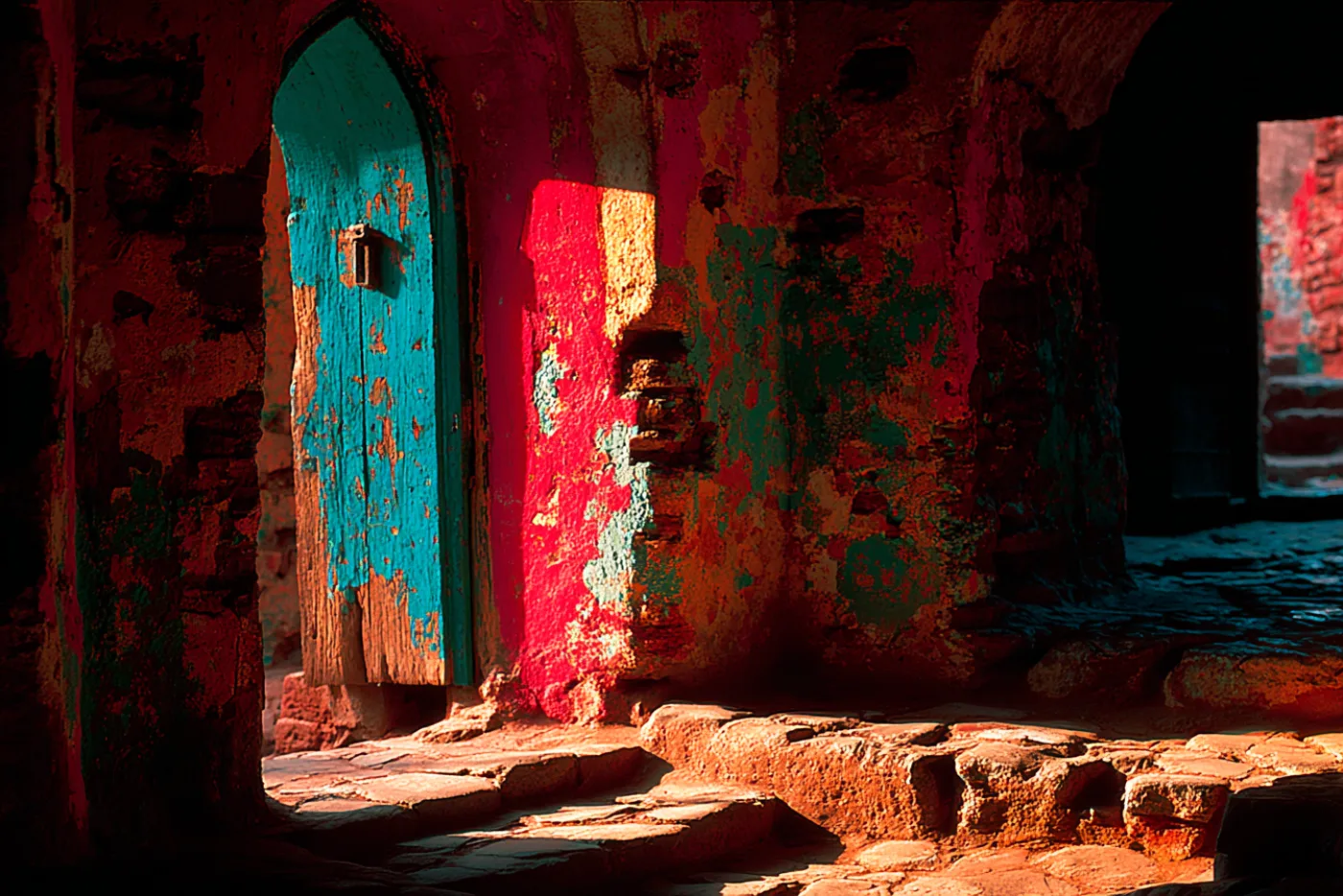
Reverie begins with a poem — never a brief, never a picture. The four lines at the top came first; the whole feature grew toward them.
This one was drawn out across a single evening, between the artist and his editor. It began not with an image but with a feeling, described in sensations and chased until it found somewhere to stand — texture, then colour, then a city. Bruised and hot. Dry and flammable, the instant before it catches. Heavy weather that never breaks. The scale and dread of Dune. Then a place: a great empire misjudged and rewritten by history, crumbling on the surface but holding a hidden strength — an erasure that had taken everything but the heart and soul. God, still there, at the centre.
One rule held the whole way: never draw the poem's own words. A poem about burning gets no flames; a poem about a face gets no face. You are meant to feel the poem in the images, never to see it in them. The city is the poem's emanation, not its illustration.
A single plate became a walk; the walk became a genre — an old advert for a destination that no longer exists, run as this weekend supplement, Elsewhere. A bright, past-tense tourism laid over something that can't be reached: calm on the surface, holding what it holds underneath.
The stills and the moving image were generated by the artist, then chosen, cropped and sequenced by hand. The machine carries only the chore tail; the making stays the person's.
Why the poem exists is the artist's, and stays his · issued by the bureau of ▢▢▢▢▢▢ · the city is not on any map